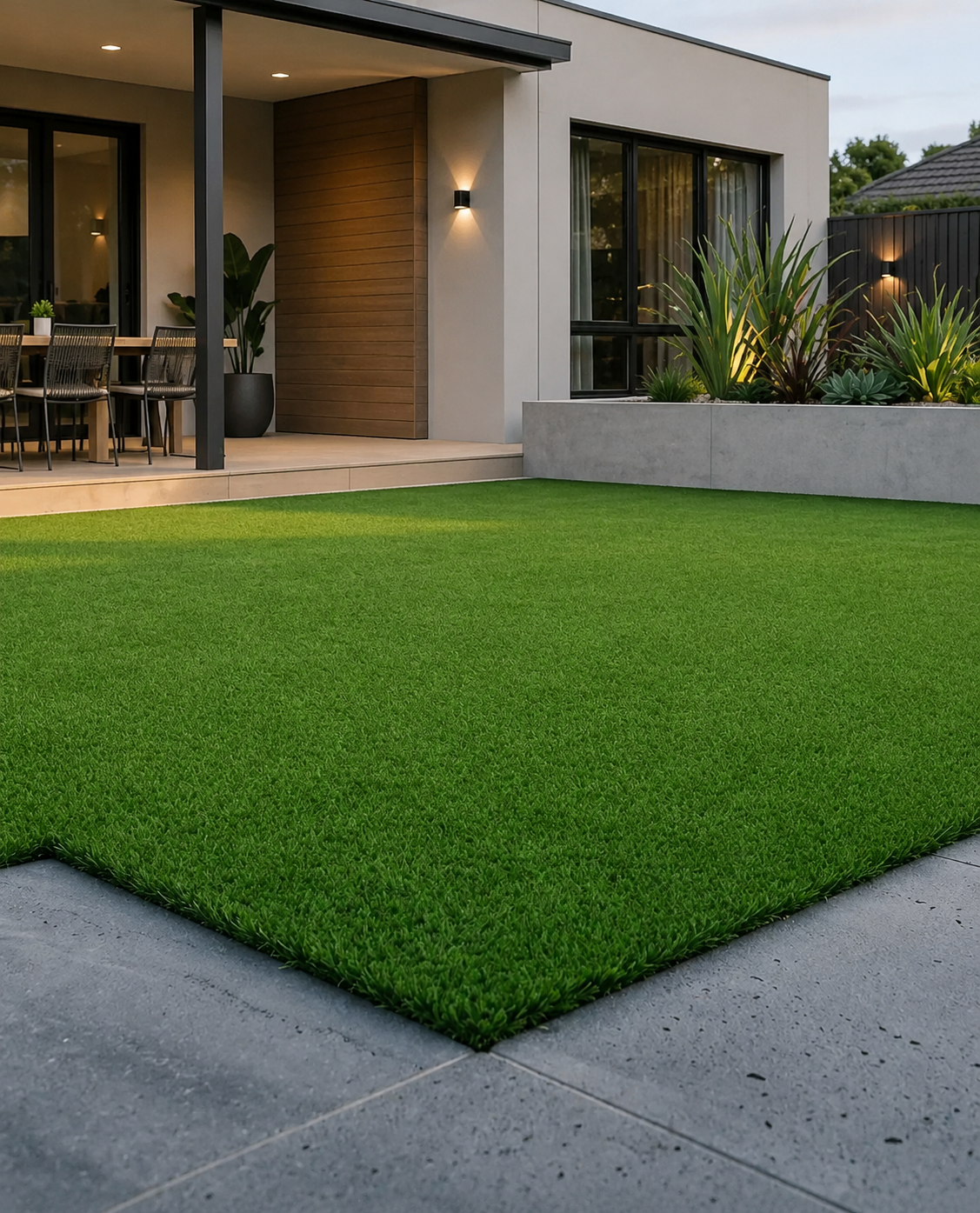
The artificial grass versus real grass debate comes up on almost every lawn job we quote, and there's no single right answer — it depends on how the space gets used, how much time you want to spend on it, and how you feel about Canterbury's dry summers and water restrictions.
Both options have genuine strengths here. Real lawn suits families who want a soft, cool surface and don't mind some seasonal upkeep, while artificial turf suits low-maintenance sections, shaded areas where grass struggles, or spots that get heavy pet or foot traffic year-round.
Water use and summer restrictions
Christchurch and Selwyn both bring in water restrictions over summer, which can mean real lawns go brown by late January if you're not watering strategically or choosing a more drought-tolerant grass mix. This is the single biggest driver behind artificial turf enquiries we get — people are tired of watching their lawn die every summer despite their best efforts.
Real lawn can be made more resilient with the right species mix, deeper, less frequent watering to encourage stronger root systems, and mowing a bit higher over the peak of summer to reduce moisture loss. But if watering restrictions are strict in your area or you're often away over summer, artificial turf sidesteps the issue entirely since it needs no irrigation at all.
Heat and surface temperature
One thing people underestimate about artificial turf in Canterbury is how hot it gets on a still, sunny nor'west day — synthetic surfaces can reach temperatures well above the surrounding air, which matters if you've got kids or pets who'll be barefoot or lying on it. Choosing a lighter-coloured or better-quality turf with good heat-dissipating backing helps, but it will never feel as cool underfoot as real grass on a hot day.
Real lawn stays noticeably cooler and softer, which is part of why many families with young children still prefer it for the main play area, even if it means more mowing and occasional summer patchiness.
Maintenance and ongoing cost
Real lawn needs regular mowing through spring and summer, occasional feeding, weed control, and dealing with moss in shaded or damp winter areas, which is common on sections with heavier clay soil that holds moisture. Artificial turf needs an occasional rinse or leaf blow and periodic brushing to keep the fibres standing up, but no mowing, feeding or watering at all, which is a genuine time saving over a full year.
The upfront cost of artificial turf is higher than seeding or laying real lawn, so it's worth thinking about how long you plan to be in the property and whether the time saved is worth that initial outlay. As an indicative ballpark only, artificial turf typically costs several times more per square metre than a basic real lawn installation, though exact figures depend heavily on turf quality, base preparation and section access, so treat any number as a starting point for a proper site quote rather than a fixed price.
Drainage and ground preparation
Both options need decent groundwork to perform well long term. Real lawn on Canterbury's heavier silt or clay soils often benefits from some soil improvement and grading to avoid pooling water in winter, while free-draining gravel-based soils common in parts of Selwyn generally need less prep work for a healthy lawn. Artificial turf relies entirely on a well-built base layer, usually compacted aggregate with proper drainage falls, since a poorly prepared base will lead to lumps, pooling or a turf that ages badly.
Post-quake ground movement or uneven levels on some older Christchurch sections can also affect both options, and it's worth having levels checked before committing to either, particularly if drainage has been an issue in that part of the garden before.
Pets, kids and heavy use
Artificial turf holds up better to constant heavy use, digging dogs, and high-traffic play areas that would otherwise turn real grass to mud through a wet Canterbury winter. It doesn't get muddy, which is a genuine win for households with dogs or young kids in and out of the house all day.
That said, pet urine can cause odour issues on artificial turf if it's not rinsed regularly, and it doesn't have the same natural cooling and dust-settling benefits real grass provides. Real lawn also copes with digging and wear by regrowing, whereas damage to artificial turf (burns, cuts, heavy staining) generally needs a proper repair rather than just growing back.
Which makes sense for your section
If your priority is minimal upkeep, consistent all-year appearance, and you're not too fussed about the barefoot feel on a hot day, artificial turf is a strong option, especially for smaller courtyard-style lawns or shaded spots where real grass struggles anyway. If you want a soft, cool, traditional lawn and don't mind some seasonal maintenance and the odd brown patch in a dry summer, real grass with a hardy, well-chosen seed mix is still the better long-term match for most Canterbury family sections.
Want this done for you?
Green Dreams Landscaping builds outdoor spaces across Christchurch, Selwyn and Canterbury. Free quotes, fully insured, 10+ years on the tools.